Coverage that doesn't stop at the gate.
Most networks solve one situation. The Sapphire PCN solves all three — on base, in country, and globally — through a single app and a single plan. The soldier never has to switch providers, change SIMs, or manage multiple accounts.

On Base
PrivateControlled coverage on the installation — barracks, lodging, Exchange, MWR, and outdoor areas.

In-Country
PublicCarrier mobility outside the gate — local travel, work, and daily activity without switching plans.

Global
ConnectedInternational roaming across participating countries — same app, same plan, same account.
On Base
PrivateControlled coverage on the installation — barracks, lodging, Exchange, MWR, and outdoor areas.
In-Country
PublicCarrier mobility outside the gate — local travel, work, and daily activity without switching plans.
Global
ConnectedInternational roaming across participating countries — same app, same plan, same account.
One App. One Plan. One Network.
On base when control matters. In country when mobility matters. Global when continuity matters.
Resilience cannot wait.
The military environment has always required stronger resilience than a typical commercial venue. Users move between controlled bases and public areas, between indoor and outdoor spaces, and between local-country movement and international travel. A network model that only solves one of those situations creates friction for the end user and governance challenges for leadership.
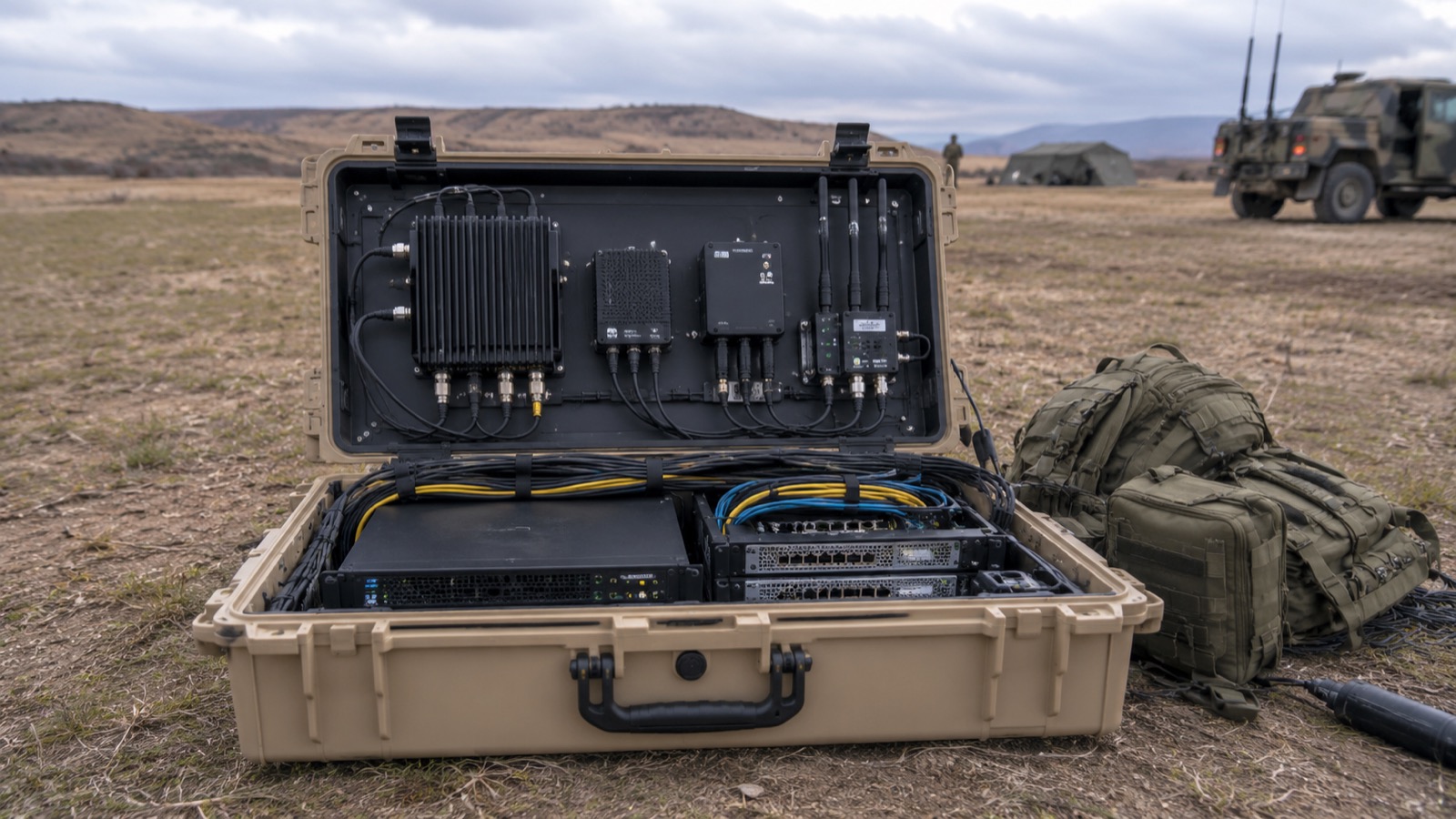
Recent conflict in the Middle East — missile and drone attacks across Gulf states, damage to U.S. facilities, and disruption to regional fiber infrastructure — has made this more urgent than ever. Installations need a rapidly deployable, resilient, and secure communications layer that can be integrated quickly and operated under clear policy control.
The better long-term answer is not only to restore communications, but to modernize the way they are delivered: a private cellular platform that can be deployed faster, controlled more tightly, segmented more securely, and supported by multiple transport paths including fiber and satellite.
“The better long-term answer is not only to restore communications, but to modernize the way they are delivered.”
The network you control is the network you trust.
A private cellular network gives installations direct control over who connects, how traffic flows, and what stays local.
5
Controls
0
DoD Overlap
100%
Operator Control
Transparency: No network eliminates every risk. But with a PCN, those controls are designed deliberately — not inherited from an uncontrollable public environment.
Identity-Based Access
Users and devices are authenticated through SIM or eSIM credentials.. Access can be granted, denied, changed, or revoked quickly and centrally.
Segmentation
Distinct APNs, slices, or logical traffic domains for soldiers, families, Exchange operations, MWR, USO, contractors, and IoT — each with its own policy..
Architectural Separation
Physically and logically separate from DoD mission networks.. Personal traffic never routes across NIPR, SIPR, or other mission systems.
Traffic Governance
Full operator visibility into who is connecting, their service class, and how resources are being used — a more disciplined posture than public-only..
Local Traffic Handling
Traffic can be U.S.-anchored or managed under agreed governance.. The operator controls what stays local and what routes through controlled gateways.
From signal to soldier.
Every layer of the Sapphire PCN is purpose-built — from the radio equipment to the helpdesk.
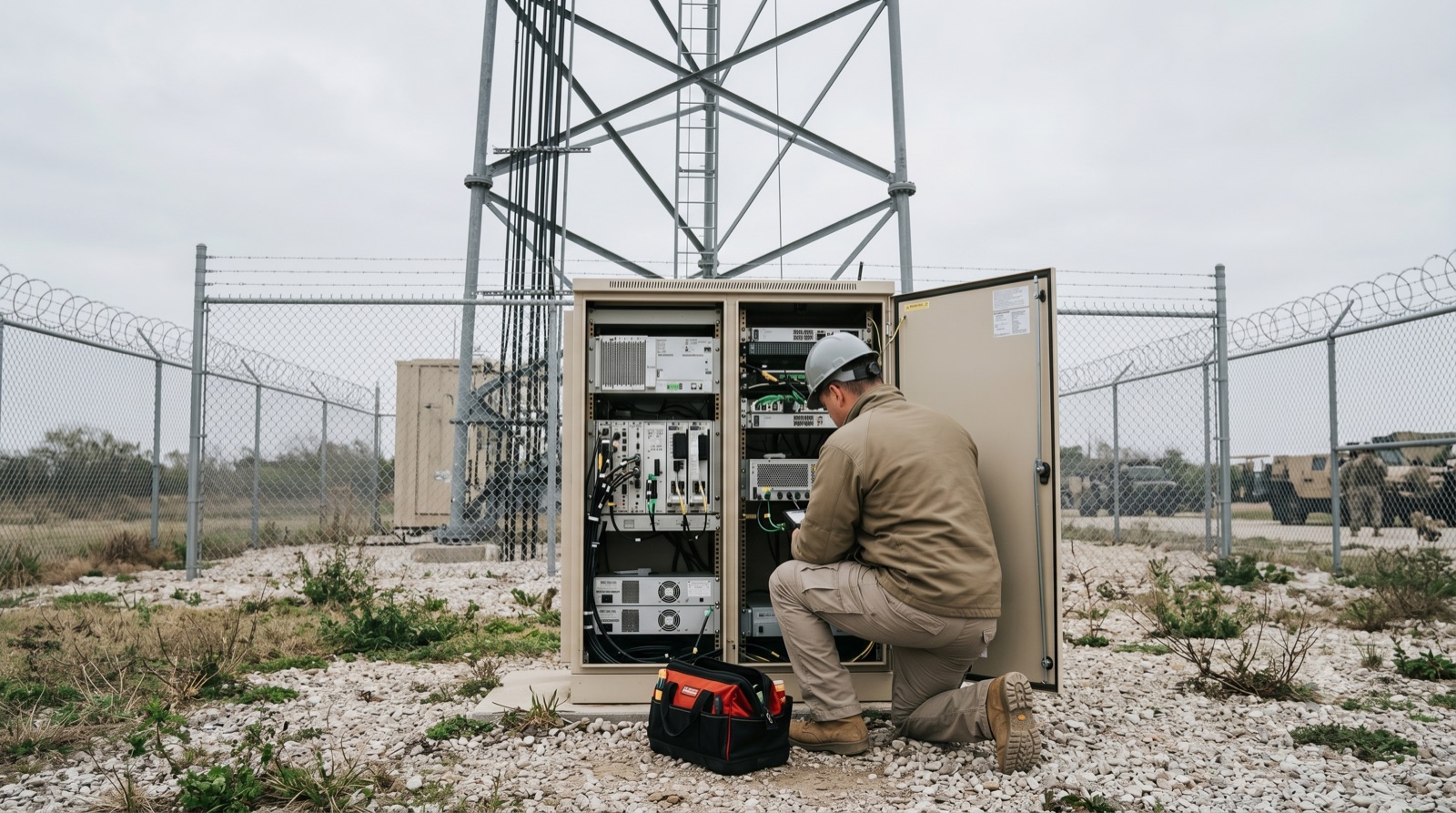
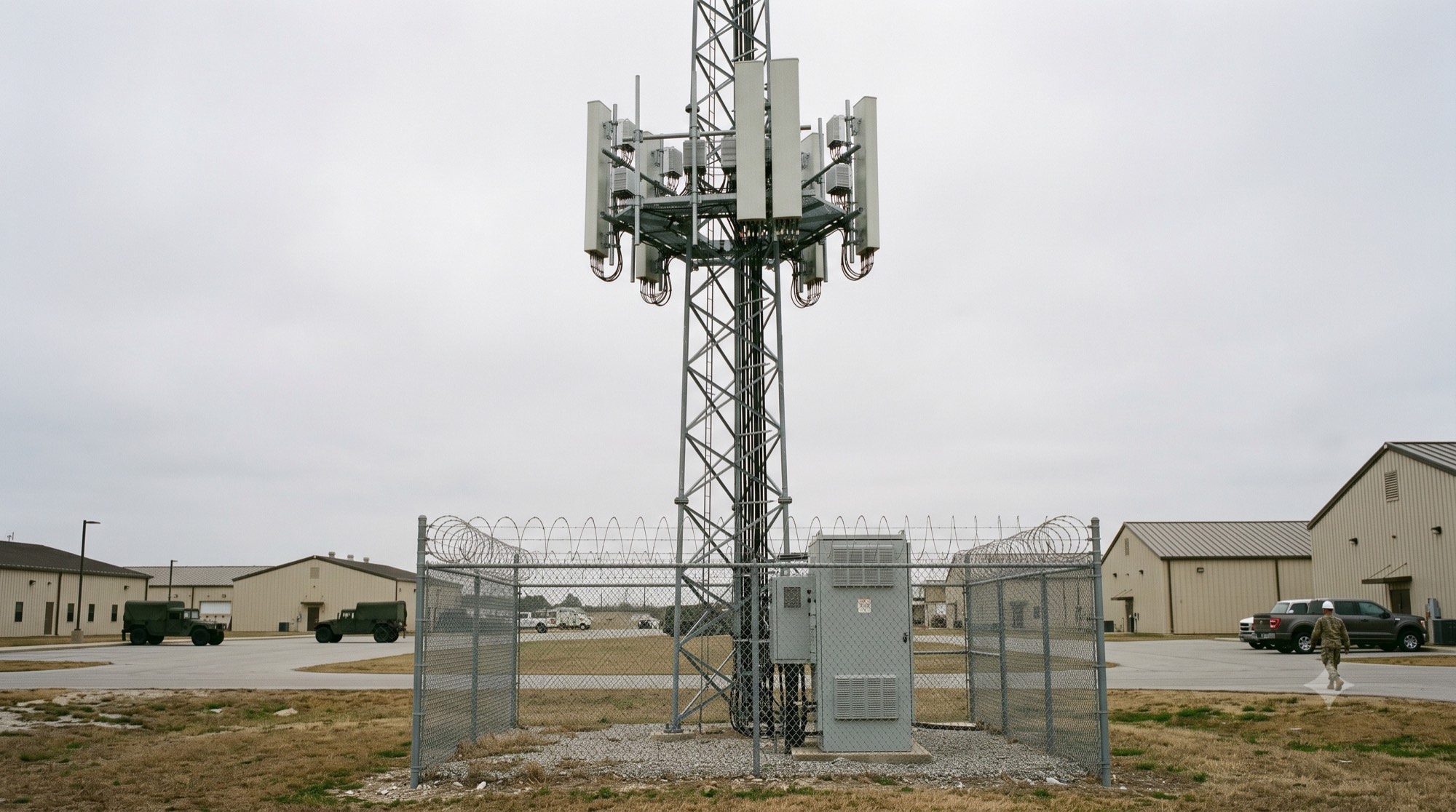
Outdoor Layer
Towers, sector radios, and small cells that create the coverage footprint across the installation.
Towers, sector radios, small cells, and controlled outdoor coverage for parking areas, common spaces, approaches, and exterior zones.
Indoor Layer
Access points inside barracks, Exchange retail, lodging, MWR, and office buildings.
Indoor radios or access points for Exchange retail, MWR, lodging, barracks, housing, and other buildings.
Control Layer
The policy engine — authentication, segmentation, device identity, and traffic steering.
Authentication, SIM/eSIM policy, device identity, service classes, segmentation, traffic steering, and operational visibility.
User Layer
Personal phones, Sapphire hotspots, In-Room routers, POS terminals, and staff devices.
Personal phones, tablets, Sapphire portable hotspots, Sapphire In-Room units, POS terminals, and staff devices.
Operations Layer
Monitoring, alarms, service assurance, helpdesk, and lifecycle support.
Monitoring, alarms, service assurance, helpdesk visibility, and lifecycle support through the managed service model.
Your device. Your choice. One app.
No special hardware required. The Sapphire PCN works with any SIM/eSIM-compatible device over 5G and 4G LTE — and everything is managed through a single app.
Bring Your Own DeviceBYOD
Use your own phone, tablet, router, or IoT device — no restrictions. Get a SIM or eSIM from us and connect over 5G or 4G LTE. The network works with what you already have.
Hardware When You Need It
If you need dedicated equipment, we offer Sapphire portable hotspots for on-the-move connectivity and Sapphire In-Room 5G / Wi-Fi 7 routers for barracks, lodging, and office environments.
Satellite-Powered Internet Gateway
Satellite connectivity serves as the primary internet gateway — delivering fast speeds to users and equipment anywhere there's sky. No terrestrial infrastructure required to get started.
One App. Everything Managed.
The Sapphire Private Network app (iOS & Android) puts activation, plan management, data monitoring, and support in one interface. Check your plan, buy data, or troubleshoot — all from your phone.

Sapphire Private Network App
iOS & Android
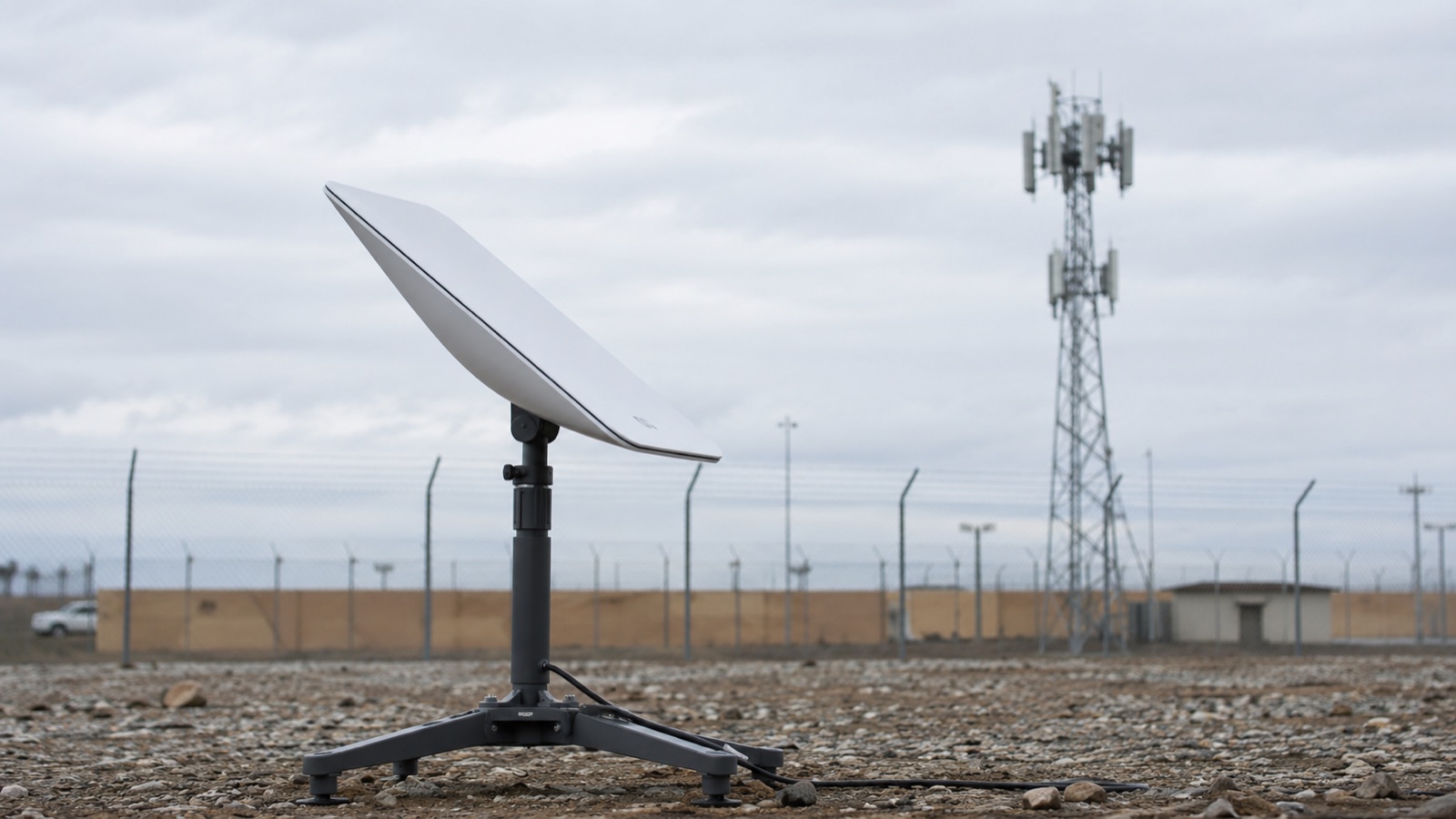
Internet from space. Deployed in days.
Traditional connectivity takes months — permits, construction, fiber runs. Low earth orbit satellites skip all of that. Point a dish at the sky, and an entire installation is online. That's not a backup plan. That's a deployment strategy.
Transport Options
Satellite
Fastest to deployLow earth orbit satellites deliver high-speed internet anywhere with power and sky. No fiber, no permits, no construction. Live in days.
Fiber
High-capacity terrestrial backhaul for permanent sites. The long-term capacity backbone where infrastructure exists.
Fiber + Satellite
Maximum resilienceHybrid design: fiber for capacity, satellite for resilience. If one path fails, the other keeps every soldier connected.
Don't wait for infrastructure. Build connectivity now.
Satellite gets you online today. Fiber grows the capacity tomorrow. Hybrid keeps you resilient always.
Deployed in phases. Zero disruption.
Each installation follows a structured rollout — survey, build, activate, enable, and support.
- 01
Site Survey & Design
Assess outdoor zones, indoor buildings, RF conditions, power, backhaul options, and user/device requirements.
- 02
Radio Layer Installation
Install towers, sector radios, small cells, or indoor access points/radios based on the site design.
- 03
Core & Policy Activation
Turn up the secure local core, device policy, authentication, segmentation, and traffic steering.
- 04
User Enablement
Issue SIM/eSIM profiles, app credentials, and device options (Sapphire hotspot, In-Room router) for barracks, lodging, and office environments.
- 05
Operations & Support
Monitor performance, alarms, utilization, service quality, and customer-support flows through one managed service model.
Built for the full military community.
The Sapphire PCN is not just a soldier personal-use product. It is a broader military-community and support platform.
U.S. Military Units
Under proper governance, the same commercial private cellular platform can support selected operational-adjacent use cases through dedicated segments while remaining separate from mission systems.
MWR
MWR facilities are among the most natural use cases. Soldiers use gyms, recreation centers, dining and leisure venues as part of everyday life on base. A PCN provides secure, high-quality service without pushing personal traffic onto mission systems.
USO
USO locations exist to support service members with lounges, communication access, and quality-of-life support. The Sapphire PCN provides resilient connectivity for messaging, video calling, streaming, and digital services.
Exchange Retail
The same platform that serves the soldier personally can also support retail environments, mobile point of sale, digital signage, inventory tools, workforce communications, and customer experience enhancements.
Barracks & Lodging
The combination of private outdoor coverage, indoor access, personal mobile service, portable devices, and in-room routers gives the platform a strong advantage in serving where soldiers actually live.
Soldier Personal Use
One predictable, affordable, Exchange-governed experience instead of juggling local SIMs, changing plans, and facing roaming surprises. Available in room, indoors, outdoors, on base, and across participating countries.
Contractors & Partners
Bases host a wider support ecosystem. A PCN can give those users approved access under controlled profiles instead of forcing them into a patchwork of local providers and unmanaged hotspots.
What we commit to. In writing.
These are the operating principles we guarantee for every Sapphire PCN deployment.
Separation
Personal and community traffic remains off NIPR, SIPR, and other mission systems unless a different approved design is expressly created for a specific use case.
Segmentation
Distinct user groups can be separated through policies, APNs, slices, or even dedicated network instances when required.
Oversight
Logging, reporting, content controls, lawful intercept support where applicable, and data-handling policies can be built into the platform design rather than left to the default behavior of outside providers.
Adaptability
The network can be configured to meet host-nation requirements, security policy, customer governance, and site-specific operational realities without forcing a one-size-fits-all model across every base.
U.S.-Directed Operating Control
Traffic handling, control-plane policy, and selected core functions can be anchored in U.S.-directed infrastructure or otherwise managed under agreed governance models.
How Sapphire PCN compares.
A public-only approach leaves the installation dependent on outside congestion, outside outages, outside policy, and outside priorities.
| Capability | Sapphire PCN | Public WiFi | Public Mobile |
|---|---|---|---|
SIM/eSIM identity-based access Only authorized users and devices are admitted — no open or anonymous connections | |||
On-base coverage by design Radio coverage planned around the installation, not inherited from a carrier's public footprint | |||
Traffic segmentation Soldiers, families, retail, and IoT each get their own policy and service class | |||
Separation from DoD networks Personal traffic stays completely off NIPR, SIPR, and mission systems | |||
Operator-controlled governance The installation controls who connects, what policy applies, and how traffic is handled | |||
Indoor + outdoor handover Seamless movement between buildings, parking areas, and outdoor zones without dropping signal | |||
In-country carrier continuity Same service continues outside the gate for local travel and daily activity | |||
Global roaming in one plan Soldier deploys or travels — same app, same plan, same account worldwide | |||
Fiber + satellite hybrid backhaul Not dependent on a single transport path — resilience when terrestrial links fail | |||
Hotspot + in-room router support Sapphire portable hotspot and In-Room 5G/Wi-Fi 7 router for barracks and lodging | |||
Bring Your Own Device (BYOD) Use your own phone, tablet, or router — no vendor lock-in, no proprietary hardware required | |||
| Total capabilities | 11/11 | 1/11 | 4/11 |
Swipe to see all columns →
The Sapphire PCN was built for this environment. The alternatives weren't.
Frequently Asked Questions
Common questions about the Sapphire Private Cellular Network.